What Is Sneaker Botting? Complete Setup, Proxy & Drop Guide

Understanding what is sneaker botting answers the foundational question that starts every automated collector’s retail checkout journey. The discipline combines multi-threaded checkout software, proxy subnets, virtual payment cards, and verified accounts to buy limited footwear at MSRP. Operators budget $45 to $120 per month for proxy infrastructure according to provider schedules.
- Core Definition: The operational process of running automated checkout threads, proxy pools, and billing profiles during limited footwear drops.
- Four Setup Pillars: Requires checkout software, residential or ISP proxies ($45-$120/month per provider plans), verified store accounts, and virtual credit cards.
- Storefront Engines: Covers first-come, first-served Shopify boutiques, DataDome-protected Footsites, and 10-minute randomized Nike SNKRS Draws.
- Compliance Rules: Regulated by store-level 1-pair-per-customer terms of sale while falling outside federal event ticket statutes.
What Is Sneaker Botting and How Does the Workflow Operate?
Automated footwear purchasing uses multi-threaded desktop software to buy limited-edition releases at retail MSRP. When newcomers ask what is sneaker botting, the answer extends beyond a single app into a complete workflow. Collectors who buy and sell limited sneakers compete against tens of thousands of online shoppers. High-demand Air Jordan retros and Travis Scott collaborations attract global traffic on every drop.
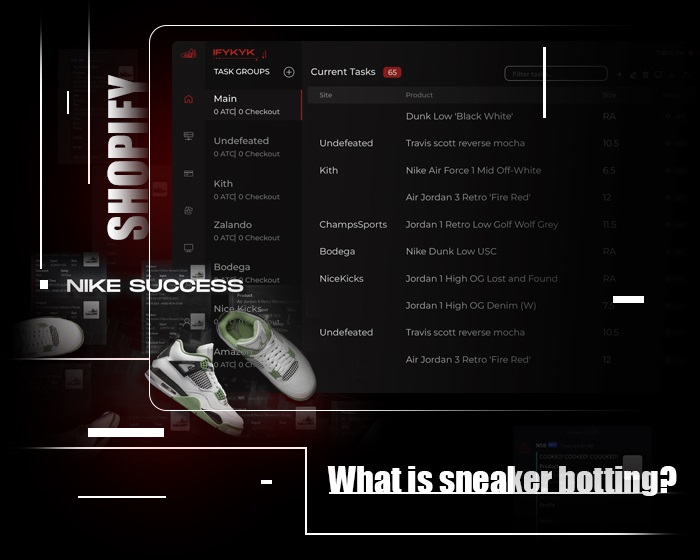
Total boutique inventory often numbers just 100 to 500 pairs per domain. Because stock is so tight, manual shoppers clicking through browser pages rarely clear checkout in time. Studying how checkout bots work reveals how software splits product monitoring from cart submission. Operators load 50 to 200 concurrent checkout tasks pre-filled with shipping addresses, size preferences, and virtual credit cards.
How Do Shopify Queues and Nike SNKRS Draws Differ on Drop Day?
Different online footwear retailers use distinct inventory allocation systems that dictate how operators configure their tasks. Independent boutiques like Kith, Undefeated, and Concepts run on the Shopify e-commerce engine. Those storefronts use a first-come, first-served checkout queue paired with checkpoint CAPTCHAs. On Shopify launches, monitor threads poll product endpoints every 1500 to 3500 milliseconds to catch live stock first.
By contrast, flagship releases on Nike’s platform follow a randomized ballot system. According to Nike SNKRS Draw documentation, shoppers enter a 10-minute window and wait for automated email confirmations. Rather than racing in milliseconds, draw-based releases require entering dozens of SMS-verified customer accounts. Each account is paired with a unique residential IP address and a distinct payment profile. Staggering entry times across the 10-minute window keeps account submissions natural.
What Proxies, Servers, and Accounts Do You Need to Start?
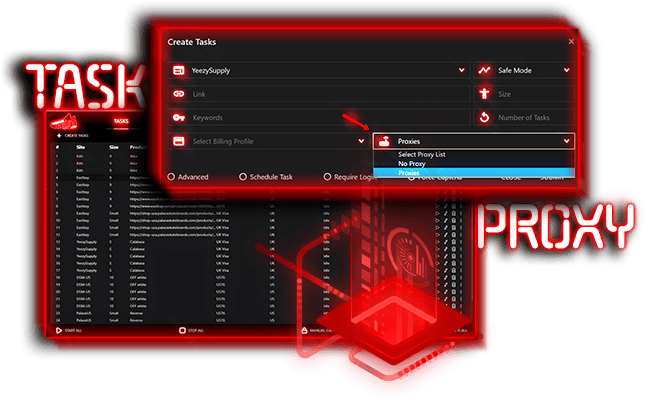
Building a reliable release-day setup requires 4 core infrastructure components working alongside your checkout software. First, operators need dedicated sneaker proxies to mask their home IP address across concurrent tasks. Rotating residential proxy plans cost $50 to $120 per month for 3 GB to 10 GB of bandwidth per provider schedules. Meanwhile, static ISP proxy subnets cost $45 to $90 per month for 25 to 50 uncapped IPs.
Second, high-volume operators rent bare-metal cloud servers located in Ashburn, Virginia or London for $50 to $95 per month per hosting plans. Cloud servers provide 1 Gbps fiber connections close to retail webservers. Third, users maintain aged Gmail accounts for one-click CAPTCHA harvesting alongside SMS-verified store logins. Fourth, virtual card services allow operators to issue 20 to 100 unique billing cards from one bank account.
How Do Anti-Bot Firewalls Inspect Automated Checkout Traffic?
Retail e-commerce platforms protect limited footwear releases using edge web application firewalls that score every incoming HTTP request. According to Cloudflare bot management documentation, security systems inspect TLS handshakes, HTTP/2 header order, IP reputation, and request velocity. If 50 checkout tasks fire from a single IP address within 1 second, the firewall returns an HTTP 429 rate-limit ban.
From a legal perspective, Federal Trade Commission online shopping guidance notes that federal BOTS Act penalties target event tickets. While automated sneaker purchasing is legal under federal statutes, retailers enforce 1-pair-per-customer rules under their store terms of service. Store fraud filters scan incoming orders for identical billing cards or un-jigged street addresses. Duplicate orders are cancelled before warehouse fulfillment. Rotating virtual cards across every profile prevents automated billing cancellations.
| Infrastructure Item | Primary Drop Function | Recommended Quantity | Monthly Budget Range |
|---|---|---|---|
| Residential Proxies | Rotate home IPs on Footsites & draws | 3 GB to 10 GB data pool | $50 to $120 per month |
| Static ISP Proxies | Run uncapped Shopify monitor threads | 25 to 50 static IPs | $45 to $90 per month |
| Cloud Sneaker Server | 1 Gbps low-latency task execution | 1 Virginia / EU VPS | $50 to $95 per month |
| Aged Gmails & Store Logins | Pass v3 trust checks & draw entries | 10 to 25 verified accounts | $15 to $45 per month |
How Do Single-Site and All-in-One Checkout Programs Compare?
Before purchasing software, beginners must decide between single-architecture scripts and multi-module desktop suites. Learning how to choose the right sneaker bot starts with reviewing which retailers carry your target silhouettes. A single-site program only supports one specific storefront engine, such as SNKRS draws or Supreme drops. When release calendars shift to Shopify boutiques or Footsites, a single-site tool sits idle.
An All-in-One sneaker bot consolidates multiple storefront modules inside a unified Windows or macOS interface. When reviewing the best sneaker bots across multi-store releases, operators compare Valor AIO, Cybersole, Stellar AIO, and NikeShoeBot. Multi-module coverage allows collectors to run Shopify tasks at 10:00 AM EST and pivot to regional chain drops minutes later.
Separating monitor threads on uncapped ISP proxies from checkout threads on rotating residential proxies prevents bandwidth exhaustion during delayed boutique drops.
How Can Beginners Configure Their First Retail Release Setup?
Configuring a first release-day setup works best by testing a small group of 10 to 20 tasks on a general-release drop. Beginners start by creating 5 to 10 distinct billing profiles using virtual credit cards. Slight address formatting variations such as “Apt 4B” versus “Unit 4B” prevent duplicate address flags. Next, operators load 1 static ISP proxy per Gmail account inside the CAPTCHA harvester window.
Thirty minutes before the scheduled launch time, the operator pings the target store using their proxy list. That pre-drop test confirms sub-250ms response times and zero HTTP 403 blocks. Tasks are then grouped by storefront with monitor delays set between 2500 and 3500 milliseconds. Reviewing task logs after each release helps operators refine their keyword filters and proxy-to-task ratios for the next Saturday drop.
| Storefront Engine | Allocation Mechanism | Optimal Proxy Type | Recommended Task Delay |
|---|---|---|---|
| Shopify Boutiques | First-come queue + checkpoint | Static ISP + residential | 2000ms to 3500ms monitor |
| Nike SNKRS | 10-minute randomized draw | 1 residential IP per account | Staggered entry over 3 mins |
| Footsites (Foot Locker) | DataDome / Kasada cart queue | Rotating residential pool | 2500ms to 4000ms retry |
| Demandware / Splash | Virtual waiting room session | Clean residential + ISP mix | Browser session hold mode |
What does “jigging” a shipping address mean during multi-pair sneaker checkouts?
Address jigging is the practice of adding minor formatting variations to your street address (such as spelling out “Street” vs “St” or adding a 3-letter prefix) so automated store filters do not cancel multiple orders going to the same household.
Do beginners need a rented cloud server on their very first sneaker release?
No, beginners running 10 to 30 tasks on a stable home fiber internet connection can run desktop software locally on Windows or macOS. Cloud servers are primarily used when scaling above 100 concurrent tasks or targeting overseas regional drops.