What Is CAPTCHA? Types, Trust Scores & Sneaker Drop Guide

Understanding what is CAPTCHA starts with its academic name: Completely Automated Public Turing test to tell Computers and Humans Apart. Every online sneaker collector should care about these verification prompts during limited footwear releases. Failing a single image grid or invisible trust check blocks checkout immediately. Modern retail firewalls score browser sessions from 0.0 to 1.0 before allowing cart requests.
- Acronym Origin: Coined in 2000 at Carnegie Mellon University as an automated Turing test that filters non-human HTTP traffic.
- Six Challenge Formats: Spans distorted text strings, 1+6 arithmetic prompts, 3×3 image grids, audio clips, 3D puzzles, and invisible v3 behavioral scores.
- Consensus Training: Image grids validate unlabeled street-view photos when 85% or more of human respondents select the same traffic light tiles per study data.
- Drop Day Impact: Aged Google accounts scoring 0.7 to 0.9 on v3 checks trigger one-click approvals during Shopify and Footsites sneaker launches.
What Is CAPTCHA and What Does the Acronym Stand For?
A verification checkpoint is an interactive security gate that separates genuine human shoppers from automated scripts. When beginners ask what is CAPTCHA, the acronym stands for Completely Automated Public Turing test to tell Computers and Humans Apart. Computer scientists at Carnegie Mellon University introduced the system in 2000. Their goal was stopping automated spam bots from registering thousands of free webmail accounts.
Named after British mathematician Alan Turing, the test reverses the classic Turing experiment. A computer program administers and grades the challenge automatically in seconds. Readers exploring what sneaker botting is quickly encounter these security gates on every Saturday morning drop. Understanding what automated bots are and the different types of web bots explains why retailers enforce strict verification layers.
How Do the 6 Main Verification Challenge Types Differ?
Web security providers deploy 6 distinct challenge formats depending on storefront risk levels and accessibility laws. Early websites relied on Text prompts showing warped alphanumeric letters. Many forms also used simple Math equations such as “What is 1 + 6?” For visually impaired visitors, Audio challenges read spoken digit strings over background static for WCAG compliance.
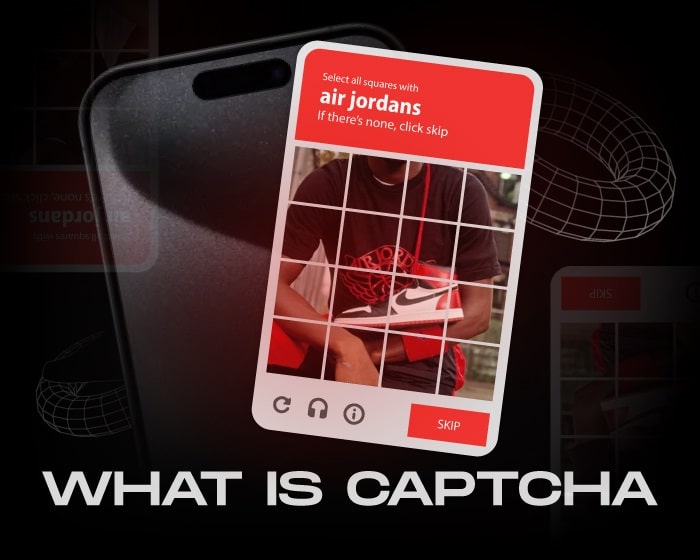
As optical character recognition improved, security vendors shifted toward visual and behavioral tests. Image grid prompts ask shoppers to select buses, crosswalks, or fire hydrants inside a 3×3 grid. Interactive 3D puzzles like Arkose Labs FunCaptcha require rotating animals or sliding jigsaw tiles into alignment. Finally, invisible reCAPTCHA v3 assigns a silent 0.0 to 1.0 behavioral score without displaying any visual box.

Why Do Sneaker Websites Deploy Image Grids and v3 Scores?
Footwear retailers enable checkpoint verification to prevent automated scripts from exhausting limited sneaker inventory in milliseconds. According to Shopify API rate limit documentation, boutique storefronts combine per-IP queue throttling with checkpoint challenges during flash launches. When a boutique turns on its bot protection switch before a drop, every shopper must submit a valid token. Only verified sessions enter the live checkout queue.
Different retail architectures pair challenge tokens with separate anti-bot firewalls. Shopify boutiques rely primarily on hCaptcha and reCAPTCHA v2 Enterprise checkpoints. By contrast, Nike bot protection systems combine device fingerprinting with randomized draw entries. Under Nike SNKRS Draw rules, verified accounts enter a timed ballot rather than racing through an image grid. Meanwhile, Footsites and European chains frequently deploy DataDome or Cloudflare Turnstile challenges.
How Do Human Responses Train Machine Learning Models?
Every image grid solved by an online shopper doubles as human-labeled training data for artificial intelligence. Early text-based v1 prompts digitized millions of archived newspaper lines from the New York Times and Google Books. Each prompt paired one known control word with one unreadable scanned word. Once v2 street-view grids launched in 2014, the training focus shifted toward urban object recognition.
When a 4×4 grid asks a user to highlight traffic lights, several tiles already have known answers. One or two remaining tiles are unlabeled test images from street-view cameras. If 85% of human shoppers click the pole supporting the traffic light per consensus data, the algorithm marks that tile as correct. That crowdsourced consensus explains why borderline corner pixels sometimes fail validation during rushed checkouts.
| Challenge System | Primary Verification Method | Common Retail Storefronts | Typical Solve Time |
|---|---|---|---|
| reCAPTCHA v2 / Enterprise | Checkbox + 3×3 or 4×4 image grid | Shopify boutiques, Supreme | 1.5s (one-click) to 8.0s (grid) |
| reCAPTCHA v3 | Invisible 0.0 to 1.0 behavioral score | Shopify checkout, Kith, Concepts | 0.2s background token generation |
| hCaptcha / FunCaptcha | Object classification & 3D rotation | Shopify checkpoints, gaming sites | 3.0s to 9.0s per challenge |
| DataDome / AWS WAF | JS telemetry + slider or audio prompt | Foot Locker, Champs, Amazon | 1.0s to 4.5s via token solver |
How Do Harvesters and Solver APIs Handle Drop Checkpoints?
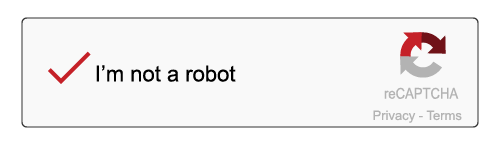
Automated checkout operators process drop-day verification challenges using two complementary tools: local Gmail harvesters and third-party solver APIs. Inside a local harvester window, the user logs into an aged Google account. Regular YouTube and search activity builds a 0.7 to 0.9 reCAPTCHA v3 trust score. High trust scores allow the user to click the v2 checkbox and receive an instant green checkmark.
When a release triggers dozens of simultaneous hCaptcha, FunCaptcha, DataDome, or AWS WAF prompts, operators connect external API services like CapSolver. Automated API services charge roughly $0.80 to $2.00 per 1,000 solved tokens per provider pricing schedules. The API processes image-to-text decoding, v2/v3 Enterprise payloads, and slider challenges in the background. It then returns a valid token string directly to the waiting checkout thread.
Generated verification tokens expire exactly 120 seconds after creation, meaning harvesters must request tokens only when checkout threads reach the live payment gate.
How Do Collectors Prepare Accounts and Tools for Retail Drops?
Preparing for a high-demand sneaker launch requires testing proxy IP reputation and Gmail trust scores beforehand. According to FTC online shopping guidance, federal bot rules regulate event ticketing while footwear stores enforce their own terms. If a proxy IP is flagged for spam, the storefront forces endless fading image grids. Those slow grids delay checkout until popular footwear sizes sell out.
Collectors studying how to buy sneakers at retail pair dedicated static ISP proxies with their harvester Gmail accounts. Keeping the IP address consistent protects the Google session’s trust rating. When evaluating the best sneaker bots for multi-store launches, operators compare Valor AIO, Cybersole, Stellar AIO, and NikeShoeBot across Shopify and Footsites modules. Running 1 dedicated harvester proxy per Gmail account preserves high v3 scores all season.
| v3 Trust Score Tier | Browser & Account Profile | Expected Checkpoint Behavior | Recommended Operator Action |
|---|---|---|---|
| 0.9 (Highest Trust) | Aged Gmail + clean static ISP proxy | Instant one-click green checkmark | Assign to primary Shopify tasks |
| 0.7 (Moderate Trust) | Active Gmail + residential proxy | Single 3×3 image grid prompt | Warm account with daily activity |
| 0.3 (Low Trust) | Fresh login or flagged subnet IP | Multi-wave fading 4×4 image grids | Rotate proxy IP & rest account |
| 0.1 (Blocked Session) | Datacenter IP with bot header leak | Immediate challenge loop / error | Replace proxy provider immediately |
Why do image grid tiles sometimes fade out slowly when clicked during a sneaker drop?
Slow-fading replacement tiles indicate that your IP address or Google session carries a low trust score (0.1 to 0.3). Switching your harvester window to a clean static ISP proxy and an aged Gmail account restores standard click speeds.
How long does a solved checkout verification token stay valid before expiring?
Standard v2 and hCaptcha response tokens remain valid for 120 seconds (2 minutes) after generation. If a task sits in a long Shopify throttle queue past 120 seconds, the harvester must generate a fresh token before submitting payment.