Ugly Sneakers Guide: How Chunky Shoes and Foam Clogs Conquered Streetwear

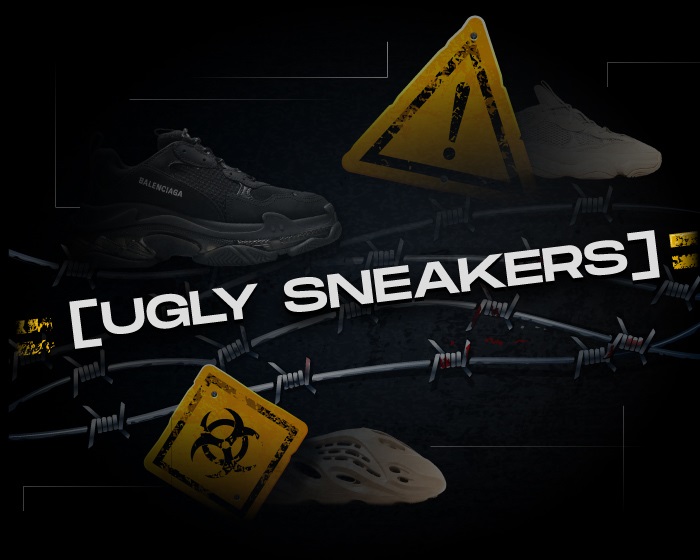
Chunky ugly sneakers evolved from an ironic 2017 runway experiment into a billion-dollar category across luxury fashion and everyday streetwear. Maybe we really like their personalities, or perhaps oversized midsoles and EVA foam deliver superior cushioning. From the $1,100 retail Balenciaga Triple S to $90 retail Foam Runners, unconventional silhouettes command serious collector demand.
- Luxury Catalyst (2017): The Balenciaga Triple S ($850-$1,100 retail) stacked three sport outsoles into a 6.5 cm platform.
- 2018 Mass Breakout: The $65 retail Fila Disruptor II and $200 retail Yeezy 500 brought chunky dad-shoe proportions to daily rotations.
- Molded Foam Wave (2020-2021): The $80-$90 Yeezy Foam Runner and collaborative Crocs Clogs traded up to $350 on resale platforms.
- Core Appeal: Wide anatomical toe boxes, plush EVA or adiPRENE cushioning, and unmistakable visual presence.
Why Did Ugly Sneakers Conquer Luxury Runways and Streetwear?
Unconventional footwear conquered modern wardrobes by rejecting slim, minimalist court profiles. Designers instead embraced exaggerated proportions and orthopedic comfort. Starting in late 2017 and accelerating through 2021, footwear studios merged 1990s cross-training nostalgia with sculpted, oversized midsoles. Buyers gravitated toward retro sneakers with multi-layered mesh and suede uppers. Those maximalist silhouettes anchored relaxed wide-leg denim outfits across global fashion capitals.
Simultaneously, remote work routines shifted consumer priorities toward comfortable everyday shoes with wide toe boxes. Once wearers experienced zero-pressure EVA foam clogs and thick adiPRENE midsoles, polarizing looks became a badge of taste. Comfort and visual volume replaced traditional sleek lasts across both luxury and sportswear catalogs. Bold silhouettes now headline every seasonal fashion week from Paris to Tokyo.
How Did the 2017 Balenciaga Triple S Start the Luxury Dad-Shoe Wave?
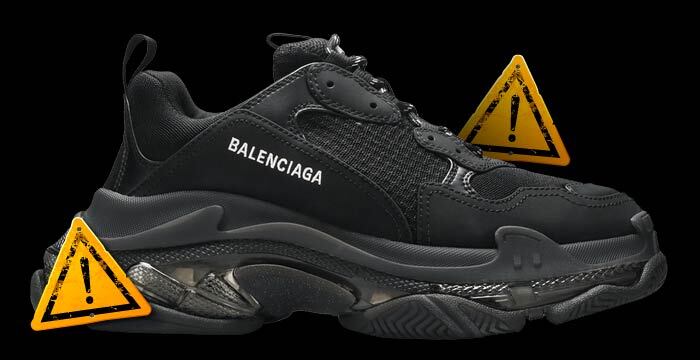
Creative director Demna Gvasalia ignited the high-fashion chunky movement in September 2017. That month, the French house launched the Balenciaga Triple S at an $850 retail price. Engineers constructed its towering 6.5-centimeter sole by stacking molds from three distinct sports. They combined a running shoe, a basketball high-top, and a track spike. Pre-distressed calfskin and mesh panels gave deadstock pairs a worn-in patina right out of the box.
Embroidered European size numbers on the toe tip and heavy rope laces completed the 4-pound silhouette. Despite retail price increases up to $1,100 in later seasons, the Triple S bridged couture and streetwear. Nearly every European luxury label launched a competing platform runner within twelve months. Celebrities styled the oversized trainer with tailored trousers and hoodies alike.
Why Did the Yeezy Foam Runner and Yeezy 500 Sell Out Instantly?
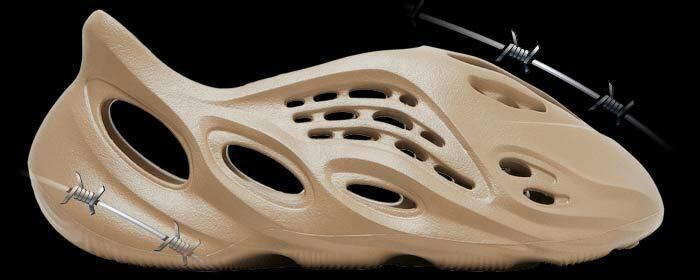
Few silhouettes generated louder pre-release debate than the 2020 and 2021 rollouts of the Yeezy Foam Runner. Priced at $80 to $90 retail, the slip-on was molded from harvested algae and lightweight EVA foam. It replaced traditional uppers and laces with oval aerodynamic cutouts. Critics mocked early photos, yet the debut “Ararat” and “Sand” colorways sold out in seconds. Those pairs quickly traded between $250 and $450 on resale markets.
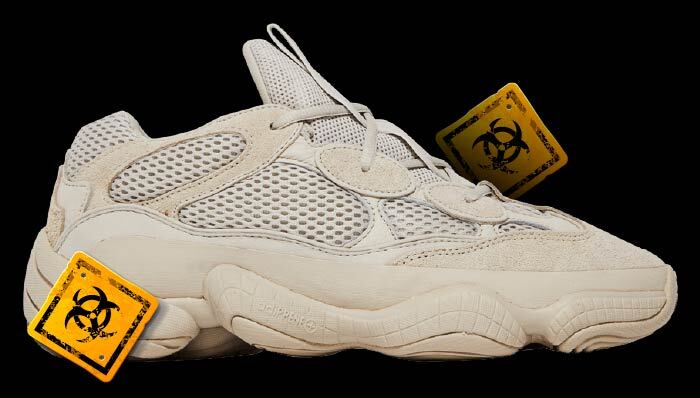
Earlier in 2018, the $200 retail Yeezy 500 achieved similar cult status without using Boost cushioning. It sat atop the bulbous 1999 KB8 III “Feet You Wear” adiPRENE+ basketball outsole. Its tonal suede-and-mesh upper quickly became a staple of earth-tone streetwear. Reflective 3M piping around the eyestays added nighttime contrast to the monochromatic build.
| Polarizing Silhouette | Debut Year | Original Retail Price | Secondary Market Range |
|---|---|---|---|
| Balenciaga Triple S | 2017 | $850 – $1,100 | $450 – $780 |
| Adidas Yeezy 500 (Blush / Black) | 2018 | $200 – $210 | $240 – $390 |
| Yeezy Foam Runner (Ararat / Onyx) | 2020 – 2021 | $80 – $90 | $140 – $360 |
| Fila Disruptor II / Crocs Collabs | 2018 / 2021 | $65 – $85 | $55 – $230 |
How Do the 2018 Fila Disruptor II and Collaborative Clogs Compare?
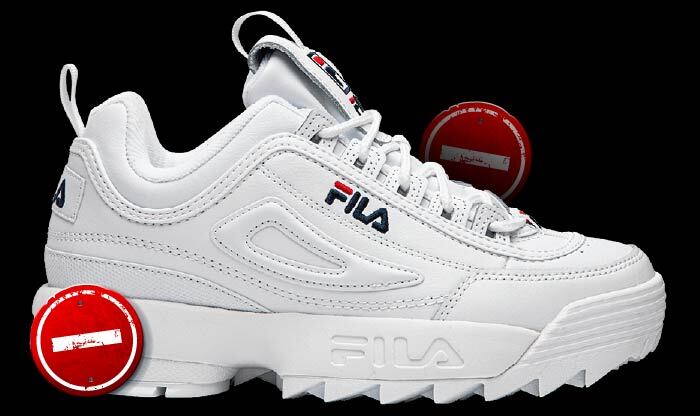
While luxury houses charged near four figures, the 1996-born Fila Disruptor II democratized the chunky trend in 2018. Priced at an accessible $65 retail tag, it featured an aggressive sawtooth rubber outsole and white leather panels. That ubiquity earned it Footwear News Shoe of the Year in 2018. Editors at The Mud Mag praised its bold platform height as a fun alternative to white canvas sneakers.
Meanwhile, injection-molded Crocs Clogs pivoted from kitchen and garden utility into high-heat raffle drops. Limited capsules in our roundup of the best Crocs collaborations, including Salehe Bembury’s $85 retail Pollex Clog, resell for double retail. Custom Jibbitz charms allowed wearers to personalize every pair with 3D badges. Breathable forefoot ports also made foam clogs ideal for warm summer travel.
| Model | Sole Construction | Weight Per Shoe (US 10) | Sizing Recommendation |
|---|---|---|---|
| Balenciaga Triple S | Triple-stacked TPU & rubber | ~860 g (30.3 oz) | True to EU size (go down if between) |
| Yeezy Foam Runner | Single-piece algae EVA foam | ~245 g (8.6 oz) | Go 1 full US size up (whole sizes) |
| Yeezy 500 | adiPRENE+ Feet You Wear pod | ~440 g (15.5 oz) | Go 0.5 US size up (snug toe box) |
| Fila Disruptor II | Sawtooth EVA & molded rubber | ~410 g (14.5 oz) | Go 0.5 US size up (narrow forefoot) |
What Are the Retail Prices, Resale Values, and Seller Fees Across Models?
Resale performance across polarizing silhouettes favors low-retail, high-scarcity foam and suede releases over $1,000 luxury runners. A $90 retail Foam Runner or $210 retail Yeezy 500 trades between $160 and $380 in deadstock condition. By contrast, an $1,100 retail Triple S often trades below retail on secondary exchanges. Collectors prize the 2018 “Blush” and “Utility Black” Yeezy 500 runs alongside early 2021 Foam Runner colorways.
“The most polarizing silhouettes in sneaker history almost always follow the same arc: initial shock in the comment sections, instant sellouts on launch morning, and multi-year cultural staying power.”
When selling deadstock pairs priced at $150 or higher, marketplace fee deductions apply. Sellers pay an 8% final value fee on eBay athletic shoe listings. Alternatively, StockX deducts a 9% base transaction fee plus 3% payment processing. Similarly, GOAT charges a 9.5% base commission plus a 2.9% cash-out fee.
How Can Collectors Acquire Polarizing Footwear Drops at Retail?
Acquiring limited sculpted clogs, collaborative dad shoes, and avant-garde runners at retail requires acting before post-drop demand peaks. Sub-$100 foam releases attract massive entry volume across Shopify boutiques and brand apps on launch morning. Deploying an all-in-one sneaker bot levels the playing field when limited inventory loads. Our sneaker bot setup guide explains how to configure proxy subnets, billing profiles, and delay timers.
When comparing checkout automation software across Shopify, Footsites, and SNKRS, experienced buyers evaluate Valor AIO, Cybersole, Stellar AIO, and NikeShoeBot. Running low-latency residential proxies alongside pre-solved captcha harvesters ensures fast checkout execution. Entering EQL boutique raffles 48 hours before launch day adds extra retail chances. Monitoring restock monitors after the initial drop helps catch canceled orders across global retailers.
Why is the Balenciaga Triple S so heavy compared to normal running shoes?
The Triple S weighs nearly two pounds per shoe because its outsole stacks three full-thickness rubber and TPU sport molds together beneath heavy multi-layered calfskin and mesh upper panels.
Do you wear socks with the Yeezy Foam Runner?
Yes, wearing mid-weight cotton crew socks with the Yeezy Foam Runner prevents bare-skin ankle rubbing against the sculpted EVA collar opening and absorbs moisture during warm weather.