Takedown Model Shoes: Flagship vs Budget Basketball Sneaker Guide

A takedown model shoe is an officially licensed, lower-priced basketball sneaker built alongside an athlete’s $200 flagship release. Far from making knockoffs look cool, takedowns like the $105 LeBron Witness 7 deliver authentic court traction. According to retail price guides, these models cost 35% to 50% less than flagship pairs.
- Flagship vs. Takedown Price: Signature flagships retail from $180 to $210, whereas official takedown alternatives retail between $85 and $160.
- LeBron Signature Tiers: Pairs the $200 LeBron XX flagship with the $160 Zoom LeBron NXXT Gen and the $105 LeBron Witness 7.
- Jordan Team Lineup: Adapts $200 Air Jordan 12, 13, and 15 design cues into $125 to $145 team models like the Jumpman Pro.
- Construction Trade-Offs: Takedowns replace costly carbon-fiber shanks and full-length Zoom strobel bags with Phylon foam and forefoot Air pods.
What Is a Takedown Model Shoe and How Does It Differ From Knockoffs?
An athletic takedown shoe is a genuine secondary silhouette created by the official brand design team. That team builds it alongside an athlete’s primary signature model. Unauthorized knockoffs illegally copy trademarks using subpar glue. By contrast, takedowns come from the verified factories listed on the Nike Global Manufacturing Map across 41 countries.
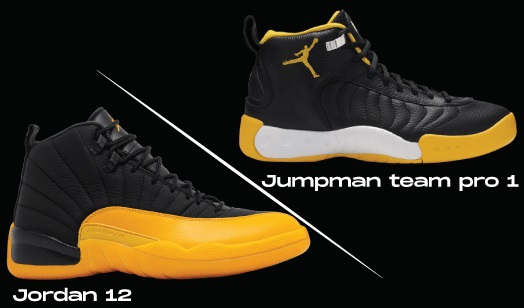
Sportswear companies build tiered product ladders so youth players can buy into an athlete’s line under $130 retail. Numbered Air Jordan signature models now retail between $200 and $215, pricing out many students. By offering a $115 to $140 takedown alternative, brands preserve signature visual DNA at a lower cost.
Even classic 1985 court shoes followed this tiered structure. In 1985, the $63 Nike Dunk college basketball shoe launched alongside the $65 Air Jordan 1 retail release.
How Do LeBron XX and Air Jordan Flagships Compare to Takedown Pairs?
Modern basketball signature lines split into three retail tiers. Those tiers include a $200 flagship, a $160 mid-tier, and a $105 budget model. During the LeBron 20 cycle, the flagship LeBron XX retailed at $200 with dual Zoom Air bags. Directly below it sat the Zoom LeBron NXXT Gen ($160 retail) and the LeBron Witness 7 ($105 retail).
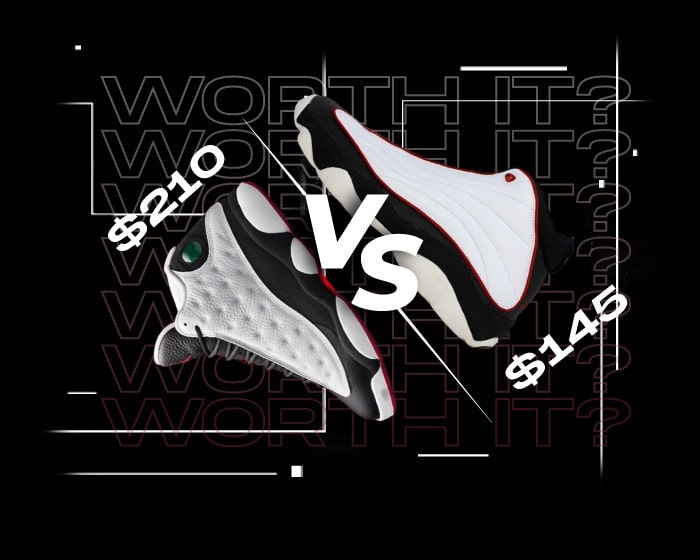
Jordan Brand applies a similar blueprint across its retro-inspired team catalog. The Air Jordan 12 ($200 retail) inspired the radiating panels of the Jordan Jumpman Pro ($145 retail) and Max Aura ($130 retail). Likewise, the Air Jordan 13 ($200 retail) carried over its sculpted outsole pods to the Jordan Team Showcase ($140 retail).
Each takedown model retains the recognizable collar cut and mudguard shape of its flagship parent. Team rosters across high school and college programs frequently wear these mid-tier pairs.
| Athlete / Brand Line | Flagship Model & Retail | Takedown Model & Retail | Retail Price Savings |
|---|---|---|---|
| LeBron James (Nike) | LeBron XX ($200) | Zoom LeBron NXXT Gen ($160) | $40 (20% Lower) |
| LeBron James (Budget) | LeBron XX ($200) | LeBron Witness 7 ($105) | $95 (47.5% Lower) |
| Air Jordan 12 Lineage | Air Jordan 12 Retro ($200) | Jordan Jumpman Pro ($145) | $55 (27.5% Lower) |
| Air Jordan 13 Lineage | Air Jordan 13 Retro ($200) | Jordan Team Showcase ($140) | $60 (30% Lower) |
What Cushioning and Materials Change Between $200 and $105 Tiers?
The $40 to $95 retail gap between a flagship shoe and its takedown sibling comes down to internal hardware. Flagship releases showcase peak sneaker cushioning technology, such as full-length Zoom strobel units and carbon-fiber plates. Those premium components require multi-step factory assembly that pushes retail prices to $200.

On a takedown model priced at $105 to $140 retail, engineers replace the carbon plate with a molded TPU shank. Instead of dual Zoom bags, takedowns use a single forefoot Zoom pod or a visible Max Air heel unit. Upper panels swap full-grain cowhide or woven Kevlar (used on the $190 retail Air Jordan 15) for engineered mesh.
Firmer Phylon midsoles and thicker XDR rubber outsoles also resist concrete wear. They often last longer outdoors than delicate indoor flagships priced at $200 retail.
Why Do Hype Collectors Overlook Team Shoes on the Resale Market?
Secondary market collectors judge footwear by scarcity and cultural storytelling rather than per-dollar court durability. Ultra-rare Friends and Family sneakers and numbered retro flagships sell out instantly. By contrast, takedown models are produced in high-volume mall runs. Because supply meets everyday demand at Foot Locker, takedowns rarely trade above retail.
A $200 carbon-plated flagship does not make a player jump higher than a $105 takedown shoe; the $95 difference buys exotic materials and collector scarcity rather than on-court skill.
Occasionally, a takedown silhouette outperforms its flagship in NBA locker rooms. During the 2023 and 2024 seasons, dozens of NBA guards rotated the Zoom LeBron NXXT Gen ($160 retail). They favored its court feel alongside the LeBron XX flagship ($200 retail). Pro endorsement proved that mid-tier basketball builds can handle elite game speed.
How Do Resale Payouts Compare Between Flagship and Takedown Models?
Comparing aftermarket clearing prices between $200 retail flagships and $105 retail takedowns shows why resellers focus on numbered drops. Limited colorways of the $200 LeBron XX trade around $260 on resale platforms. Meanwhile, general-release takedowns like the $105 LeBron Witness 7 average $75 on secondary marketplaces, roughly 28% below retail.
According to the GOAT seller commission guide, sellers pay a 9.5% base commission plus a seller fee and 2.9% cash-out fee. On a $260 flagship sale, a 12.4% deduction plus $15 shipping leaves roughly $212.76 net. Subtracting the $200 retail cost leaves a $12.76 net spread.
On a $75 takedown sale, the same GOAT fee structure leaves roughly $50.70 net against a $105 retail tag. For budget buyers, that below-retail secondary pricing makes marketplaces a great place to buy $75 gym shoes.
| Model Tier & Edition | Original Retail | Average Resale Ask | GOAT Net (Est. After Fees) |
|---|---|---|---|
| LeBron XX Pink Diamond (Flagship) | $200 | $260 | $212.76 |
| Air Jordan 12 Flu Game (Flagship) | $200 | $295 | $243.42 |
| LeBron NXXT Gen FaZe (Mid-Tier) | $160 | $155 | $120.78 |
| LeBron Witness 7 GR (Takedown) | $105 | $75 | $50.70 |
When Should Athletes and Buyers Choose a Takedown Pair at Retail?
Youth basketball players and outdoor hoopers get strong value from takedown shoes. These budget pairs are priced at $85 to $145 in store guides. Growing kids who outgrow a shoe size every six months rarely need a $200 flagship. Readers following seasonal performance reviews can check our sneaker blog for side-by-side model comparisons.
When buyers target a limited $200 flagship on release morning, understanding the Nike SNKRS draw system is essential. Reading our retail sneaker buying guide also helps shoppers prepare accounts. Collectors targeting high-demand SNKRS and Shopify drops use checkout platforms such as Valor AIO, Cybersole, Stellar AIO, The Shit Bot, and NikeShoeBot.
Whether choosing an $85 retail Giannis Immortality for outdoor concrete or entering a draw for a $200 retail Air Jordan 13, matching the shoe tier to the court saves money.
Are takedown basketball shoes made in the same factories as flagship models?
Yes, official takedown models like the LeBron Witness 7 ($105) and Jordan Jumpman Pro ($145) are manufactured in the same contracted Nike and Jordan factories as $200 flagship releases.
Why are takedown shoes often better for outdoor basketball courts?
Takedown models typically use firmer Phylon foam midsoles and thicker, deeper-grooved rubber outsoles that resist concrete abrasion better than soft indoor flagship compounds.