Restocks Bankruptcy: 14-11-2023 Ruling, 17,000 Consigned Pairs & Claims

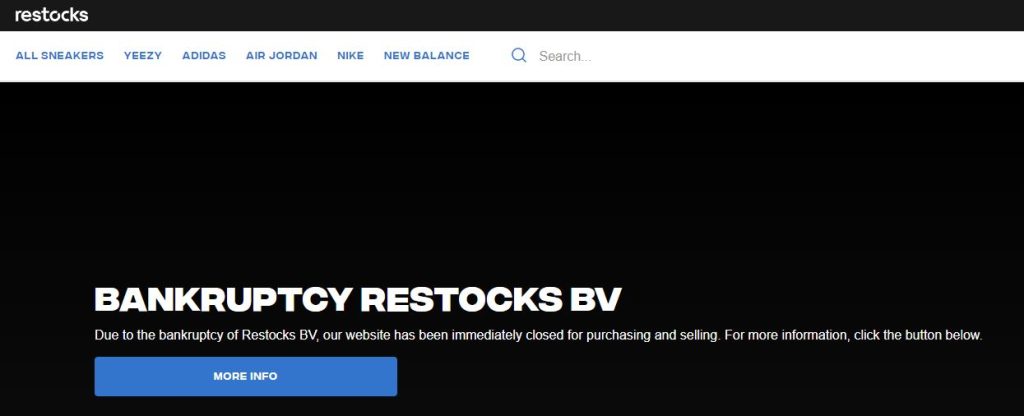
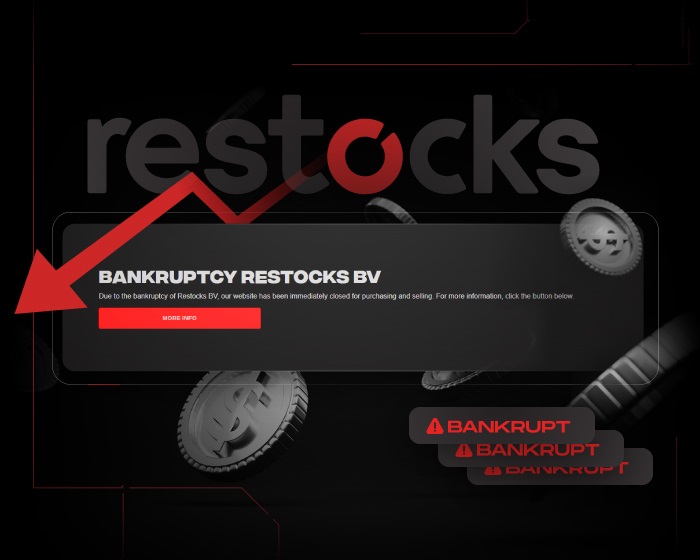
The Restocks bankruptcy declared on 14-11-2023 by a Dutch court in Breda shut down one of Europe’s largest sneaker marketplaces. Thousands of European sellers feared they would lose their consigned kicks and unpaid payout money when 17,000 pairs were frozen in storage. Below we examine the 3-day trustee return window, creditor hierarchy, and safer resale channels.
- Insolvency Date: Declared bankrupt on 14-11-2023 (November 14, 2023) in the Netherlands after months of delayed seller payouts.
- Frozen Consignment Stock: Roughly 17,000 consigned sneaker pairs sat locked inside the Breda warehouse at the time of closure.
- Return Window: Court-appointed trustees gave consignors just 3 days to pay a return shipping fee to reclaim unsold inventory.
- Unpaid Seller Claims: Sellers owed cash for already-completed sales were classified as unsecured creditors behind tax and bank claims.
What Led to the 14-11-2023 Restocks Bankruptcy in the Netherlands?
Founded in 2016 in Breda, the Dutch sneaker marketplace was declared bankrupt by a Netherlands court on 14-11-2023.
Throughout 2022 and 2023, the platform expanded across the European sneaker resale market using a two-tier selling model. Sellers could list from home or ship boxes directly into the Breda consignment warehouse. By mid-2023, thousands of users reported payout delays stretching from 60 to 180 days.
Affected merchants organized the ANTI-RESTOCKS.NET seller group on Facebook to document overdue bank transfers. Members shared screenshots of missing customer support replies and frozen account balances. Rising warehouse overhead and cooling post-2022 secondary shoe prices drained working capital. On 14-11-2023, the court appointed a bankruptcy trustee to liquidate operations. The online storefront and mobile app went dark immediately.

What Happened to the 17,000 Consigned Pairs Under the 3-Day Window?
Roughly 17,000 unsold consigned pairs sat inside the Breda facility when the trustee froze dispatches in November 2023.
Under Dutch insolvency practice, consigned goods remain the property of the individual seller. However, ownership must match specific barcoded SKUs inside the warehouse. Furthermore, the bankruptcy estate lacked liquid funds to pack and ship 17,000 boxes back across Europe for free.
The court-appointed trustee sent an urgent notice requiring consignors to pay a return shipping fee within 3 days. Sellers who paid that fee inside the 3-day window reclaimed their physical kicks. Unclaimed pairs after the 3 days risked liquidation alongside global footwear stock tracked across Nike’s global manufacturing network. Many sellers protested the tight 72-hour deadline and shipping charges.
| Claimant Category (Nov 2023) | Estimated Exposure | Trustee Resolution Path | Recovery Outcome |
|---|---|---|---|
| Warehouse Consignors (Unsold) | 17,000 physical pairs | Pay return shipping within 3 days | Boxes returned if paid in 3 days |
| Consignors (Missed Deadline) | Unclaimed warehouse stock | Absorbed into estate liquidation | Converted to unsecured claim |
| Unpaid Sellers (Sold Pairs) | Completed 2023 payouts | File unsecured creditor claim | Ranked behind tax & bank debt |
| Card & PayPal Buyers | Unshipped 2023 orders | Initiate issuer chargeback dispute | 100% refund via card network |
Why Did Sellers With Completed Sales Face Unsecured Creditor Status?
Sellers whose sneakers sold before 14-11-2023 became unsecured creditors waiting at the back of the court payout line.
Once a consigned pair sold and shipped to a buyer, title to the physical shoe left the warehouse. The seller no longer owned a physical box of sneakers. Instead, the seller held an unpaid invoice against the insolvent Dutch company for net sale proceeds.
In European bankruptcy proceedings, administrative trustee costs, tax authorities, and secured bank lenders collect first. Unsecured trade creditors and individual sellers split whatever residual cash remains after liquidation. Because the estate carried heavy debt, most sellers with pending cash balances recovered 0% to 5% of their owed money through court filings. Thousands of merchants wrote off those balances.
How Could Buyers Recover Unshipped Orders Under Payment Protection Rules?
Shoppers who paid by credit card or PayPal for unfulfilled 2023 orders recovered 100% of their funds through chargebacks.
When the Breda authentication center halted outbound parcels on 14-11-2023, hundreds of pending buyer orders remained unshipped. Buyers who paid via direct bank transfer faced the same unsecured creditor queue as unpaid sellers. By contrast, credit card and PayPal users had statutory non-delivery protections.
Consumer rules mirrored in the FTC online shopping protection guide require merchants to ship within stated timeframes or issue full refunds. Filing a non-delivery dispute within 120 days of the transaction allowed card issuers to reverse the charge. Cross-border buyers also avoided non-refundable customs duties outlined in harmonized footwear tariff schedules because unshipped parcels never cleared customs.
How Do Consignment Risks Compare Against Direct-Ship Resale Platforms?
Direct-ship marketplaces keep physical inventory in the seller’s hands until a verified buyer payment is locked in escrow.
The 14-11-2023 collapse exposed the core structural hazard of remote warehouse consignment. Shipping 10 or 50 pairs into a third-party warehouse surrenders physical control months before a sale occurs. Our guide on where and how to resell sneakers explains how ship-from-home platforms eliminate warehouse seizure risk.
According to StockX, GOAT, and eBay fee schedules, direct-ship sellers pay 8% to 12.4% in combined fees only after an order matches. On a $250 sneaker sale, eBay deducts an 8% flat fee ($20.00), releasing $230.00 net upon authentication. StockX Level 1 deducts 9% commission, 3% processing, and $4 shipping ($34.00 total), paying $216.00 net after verification.
Holding inventory at home until a buyer’s funds clear escrow prevents a 3-day bankruptcy freeze from trapping 17,000 consigned pairs in a third-party warehouse.
| Resale Channel Model | Inventory Custody | Fee on $250 Sale | Payout Timing & Risk |
|---|---|---|---|
| eBay Authenticity Guarantee | Held by seller until sold | 8.0% flat over $150 ($20.00 fee) | $230.00 net / Paid after hub check |
| StockX Direct-Ship (Level 1) | Held by seller until sold | 9.0% + 3.0% + $4 ($34.00 fee) | $216.00 net / Paid day of verification |
| GOAT Ship-From-Home | Held by seller until sold | 9.5% + $5 + 2.9% ($35.09 fee) | $214.91 net / Escrow protected |
| Warehouse Consignment (2023) | Stored in 3rd-party facility | Variable commission + return fee | High insolvency custody exposure |
How Do European Resellers Protect Inventory and Payouts After 2023?
European sellers protect working capital by diversifying across instant-payout exchanges and keeping physical stock in home storage.
Experienced merchants never leave pending payout balances sitting inside a marketplace wallet. They withdraw cleared funds to a bank account right after authentication completes. Even a 2.9% cash-out fee is safer than leaving cash in an exchange wallet. Ship-on-demand listings also avoid long-term warehouse storage exposure.
On the acquisition side, our retail sneaker buying guide and best sneaker bot comparison emphasize low-cost retail sourcing. Buying at retail price helps margins absorb marketplace fees. Buyers comparing automated checkout software evaluate Valor AIO, Cybersole, Stellar AIO, and NikeShoeBot for Shopify and regional boutique releases. Keeping physical stock in your own hands remains the golden rule.
When did the Dutch court declare the sneaker platform bankrupt?
The court in Breda, Netherlands issued the official bankruptcy declaration on 14-11-2023 (November 14, 2023) and appointed a trustee to oversee the estate.
How many consigned sneaker pairs were held in the Breda warehouse?
Roughly 17,000 consigned sneaker pairs were stored in the warehouse when operations halted, and sellers were given 3 days to pay return shipping fees.