How to Start a Jordan Collection: 6 Tips Fit for 6 Rings

Learning how to start a Jordan collection begins with six foundational tips fit for Michael Jordan’s six NBA championship rings. New collectors balance 1985 OG colorways, championship retros, boutique collaborations, $115 to $145 takedown pairs, and modern court performers. Following these steps builds a versatile rotation without overspending.
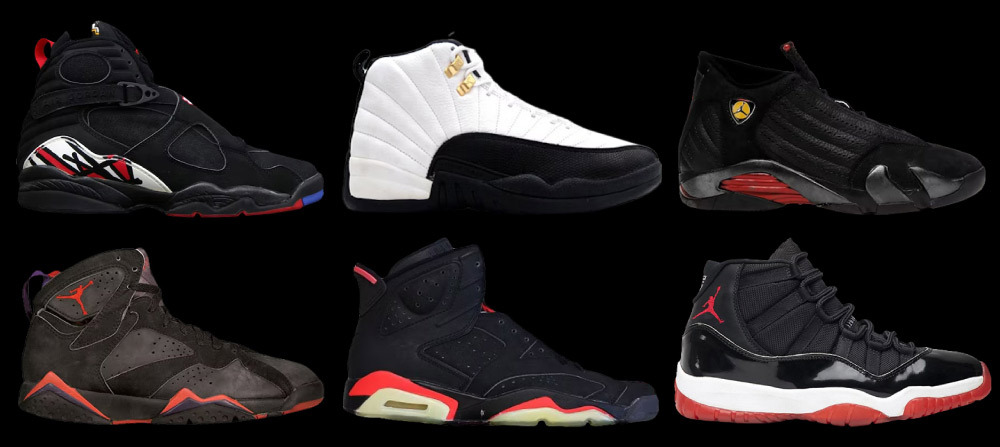
- The 6-ring core: Focus on the six championship silhouettes (models 6, 7, 8, 11, 12, and 14) worn during the 1991-1993 and 1996-1998 Bulls titles.
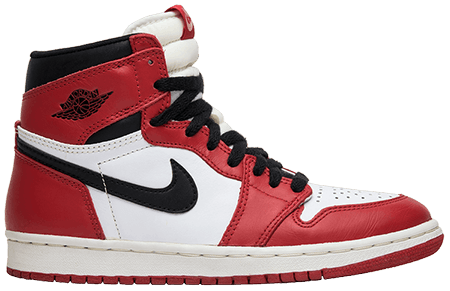
- 1985 pillar colorways: Anchor your display shelf with the Air Jordan 1 High OG in Chicago, Bred (Banned), Royal, or Black Toe ($180 retail).
- Tiered budget entry: Mix $115 to $145 takedown models (Spizike Low, MVP, Legacy 312) with $200 to $230 OG retros for daily wear.
- Aftermarket fee math: Buying or selling grails on eBay ($150+ threshold) carries an 8% fee, saving 4% to 4.5% over StockX or GOAT.
Which Six Championship Silhouettes Form the Core of a Jordan Collection?
The six NBA championship silhouettes (models 6, 7, 8, 11, 12, and 14) form the historical backbone of any serious sneaker rotation.
The complete Air Jordan signature timeline spans more than 38 numbered models since 1985. Still, collectors prioritize the shoes worn during Michael’s six NBA Finals victories. During the first Chicago Bulls three-peat (1991 to 1993), he captured titles in the Infrared 6, Cardinal 7, and Playoffs 8. Each of those Tinker Hatfield designs introduced distinct midsole and collar geometry.
After returning from baseball, he clinched his second three-peat (1996 to 1998) in the Bred 11, Flu Game 12, and Last Shot 14. Studying our guide to the six championship signature shoes helps beginners target these OG colorways. Most championship retros launch at $200 to $230 retail.
Why Are 1985 Air Jordan 1 OG Colorways Essential Pillars for Beginners?
Original 1985 Air Jordan 1 colorways like the Chicago and Bred serve as the cultural and styling foundation of the brand.
Peter Moore designed the first silhouette for the 1984-1985 rookie campaign at $65 retail. That official Air Jordan 1 franchise launched modern footwear collecting. Unlike bulkier 1990s basketball midsoles, its flat rubber cupsole and leather panels pair easily with denim or trousers. Because the cupsole uses stitched rubber rather than polyurethane foam, pairs stay wearable for decades.
Beginners should start with one High OG ($180 retail) or Low OG ($140 retail) in a heritage 1985 blocking. The Varsity Red and white Chicago, black-and-red Bred, Varsity Royal, and Black Toe remain timeless wardrobe anchors. Every serious collector keeps at least one 1985 colorway on the top shelf.
How Do Modern Retro Releases and Reimagined Editions Fit Into a Rotation?
Modern retro releases and Reimagined editions let collectors buy wearable pairs at $180 to $215 retail.
Polyurethane midsoles on vintage 1990s and early 2000s pairs oxidize and crack after 10 to 15 years. Buying recent retros is therefore essential for regular street wear. Seasonal retro calendars mix faithful OG reissues with “Reimagined” storytelling packs. Top examples include the 2022 Lost and Found Chicago 1 ($180 retail) and 2023 White Cement 3 ($210 retail).
Non-OG modern classics like the Thunder 4s, Shattered Backboard 1s, and Bordeaux 6s also offer fresh color palettes. Many recent retro drops trade within $15 to $30 of their $200 to $215 retail tags on secondary platforms. That pricing gives newcomers affordable entry points year-round without sacrificing authentic retro cushioning.

| Collection Tier | Key Example Models | Retail Price Band | Typical 2026 Resale Range |
|---|---|---|---|
| 1985 Pillar OGs | AJ1 High Chicago / Bred / Royal | $180 retail | $175 to $380 StockX / eBay |
| 6-Ring Championship Retros | AJ6 Infrared / AJ11 Bred / AJ12 | $200 to $230 retail | $220 to $360 StockX / eBay |
| Boutique Collaborations | Travis Scott / A Ma Maniere | $150 to $250 retail | $240 to $1,450 StockX / eBay |
| Hybrid Takedown Models | Spizike Low / MVP / Legacy 312 | $115 to $160 retail | $95 to $145 retail / outlets |
Which Travis Scott, A Ma Maniere, and Trophy Room Collabs Stand Out?
Partnerships with Travis Scott, A Ma Maniere, and Trophy Room headline the modern collaborative tier for collectors.
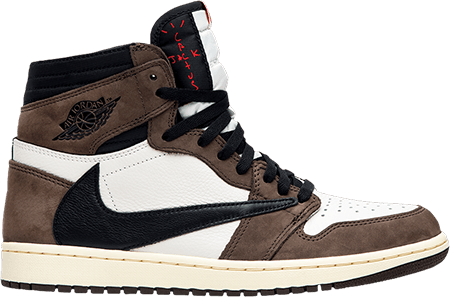
Since 2019, the Travis Scott x Air Jordan archive has defined collecting with reverse Swooshes and nubuck uppers. From the 2019 High Mocha ($175 MSRP, $1,200+ resale) to the $150 Low OG series, Cactus Jack drops lead secondary premiums. Each release includes multiple waxed lace sets, embroidered heel logos, and custom box art.
For luxury materials at lower prices, A Ma Maniere’s collaborative silhouettes pair quilted satin liners with Violet Ore suede. Those releases span models 1, 2, 3, 4, 5, and 12 ($200 to $250 retail). Meanwhile, boutiques like the Trophy Room Air Jordan collaborations deliver numbered, trophy-inspired storytelling for fans.
How Do $115 to $145 Takedown Models Protect Your Prized Grail Pairs?
Priced between $115 and $160 retail, hybrid and takedown models provide durable beaters that preserve expensive retros.
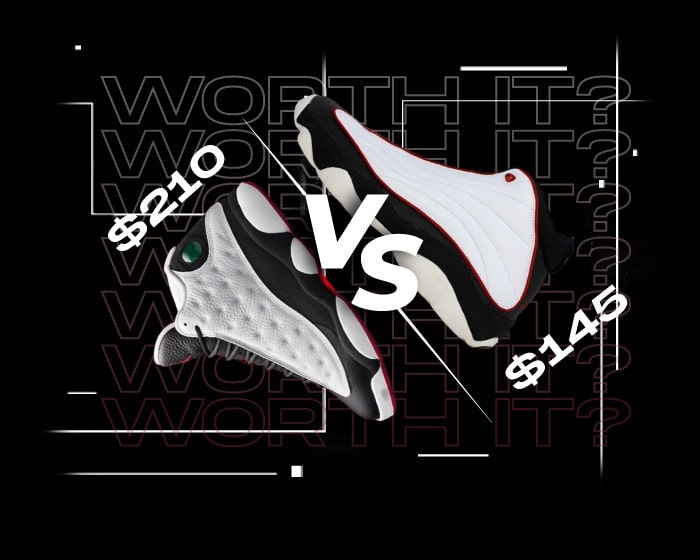
New collectors often make the mistake of wearing a $350 deadstock grail in rainy weather. Adding one or two hybrid and takedown Jordan models gives your rotation a worry-free daily option. Silhouettes like the Spizike Low ($160 retail), Dub Zero, and Stadium 90 blend heritage mudguards with modern comfort.
Rotating a $140 daily pair on rainy weekdays extends the midsole life and outsole stars of your $215 OG retros by years.
When selling a pair to upgrade your shelf, check the eBay athletic shoe fee schedule. Pairs sold at $150 or above pay just an 8% fee ($24.00 on a $300 sale). That leaves $276.00 net toward your next pickup.
| Seller Upgrade Scenario | eBay Net (8% Fee) | StockX Level 1 Net | GOAT Standard Net |
|---|---|---|---|
| GR Retro Sale ($190 gross) | $174.80 net ($15.20 fee) | $163.20 net ($26.80 fee) | $162.11 net ($27.89 fee) |
| 6-Ring OG Retro ($260 gross) | $239.20 net ($20.80 fee) | $224.80 net ($35.20 fee) | $223.63 net ($36.37 fee) |
| A Ma Maniere Collab ($320) | $294.40 net ($25.60 fee) | $277.60 net ($42.40 fee) | $276.44 net ($43.56 fee) |
| Travis Scott Low ($750 gross) | $690.00 net ($60.00 fee) | $656.00 net ($94.00 fee) | $654.37 net ($95.63 fee) |
Which Modern Numbered Silhouettes Deliver Hardwood Performance and Retail Access?
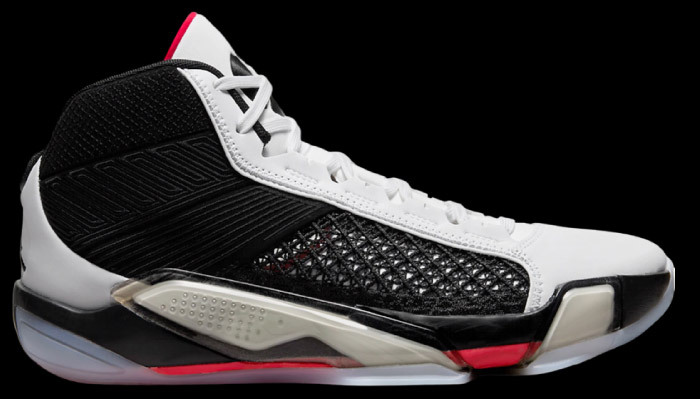
Modern flagship models like the Air Jordan 38 ($200 retail) and 39 pair full-length Zoom Strobel cushioning with heritage court DNA.
Although 1980s and 1990s retros dominate streetwear, their firm cupsoles lack modern court bounce. Ballers who play indoor pickup games should add the Air Jordan 38 performance model. Its X-Plate containment system nods to the 1993 Playoffs 8 straps while pairing Zoom Strobel with Cushlon 3.0 foam.
Securing limited OG retros requires knowing how to buy sneakers for retail on drop day. Collectors who automate release-morning tasks compare Valor AIO, Cybersole, Stellar AIO, and NikeShoeBot across SNKRS, Shopify, and Footsites.
- Three-pair starter rule: Begin with one 1985 AJ1 colorway, one championship retro, and one daily beater.
- Hydrolysis prevention: Wear polyurethane-midsole retros (models 3, 4, 5, 6, and 8) monthly so the foam stays flexible.
- Climate storage: Store boxes at 65°F to 72°F and 50% humidity with silica gel packs to slow sole yellowing.
- Retail patience: Wait 7 to 10 days after SNKRS pairs deliver when aftermarket asks dip 15% to 20%.
Which numbered models use polyurethane midsoles that can crumble over time?
Models 2, 3, 4, 5, 6, and 8 use polyurethane midsoles susceptible to hydrolysis after 10 to 15 years. By contrast, the Air Jordan 1 uses a stitched rubber cupsole and the 11 uses Phylon foam.
Do all numbered signature models fit the same way?
Models 1, 3, 5, and 12 generally fit true to size. Wide-footed collectors often go up 0.5 size in the snugger Air Jordan 4 and 11.