Gum Sole Sneakers: Natural Rubber vs Synthetic & Care Guide

Gum sole sneakers are athletic and lifestyle shoes built with unbleached natural latex outsoles that cure into a tan shade during heat vulcanization. The magic of these tan soles lies in their soft 55 to 60 Shore A compound, which delivers more grip on wood and concrete than dyed rubber. Priced between $65 and $135 retail, classic pairs anchor skate and court rotations. Below we compare material science, iconic models, and cleaning steps.
- Natural latex origin: Extracted from Hevea brasiliensis rubber trees and heat-cured at 140 to 160 degrees Celsius without carbon black dyes.
- Superior surface tack: Measures 55 to 60 on the Shore A hardness scale, flexing into grip tape and hardwood floors without leaving dark scuff marks.
- Flagship retail staples: Anchored by the $65 retail Vans Authentic, $100 retail Adidas Samba OG, and $115 retail Nike SB Dunk Low Orange Label.
- Three-step maintenance: Requires dry-brushing loose grit, scrubbing with mild soap and warm water, and wiping dry immediately to preserve translucency.
What Are Gum Soles and How Does Natural Latex Create Their Tan Color?
Natural tan outsoles are molded from polyisoprene latex tapped from rubber trees. Heat curing turns that milky sap into a semi-translucent caramel elastomer.
Synthetic petroleum rubbers require carbon black or titanium dioxide pigments. By contrast, natural crepe and latex rubber keep their organic amber tone. During manufacturing, raw latex sap is coagulated and rolled into sheets. Factories vulcanize those sheets with 2% to 3% sulfur per compounding data at 140 to 160 degrees Celsius. That thermal cross-linking caramelizes natural proteins inside the latex, producing the honey-brown hue.
Factories then reheat the vulcanized compound inside steel outsole molds. The warm elastomer forms a permanent bond with canvas or leather uppers. Because the tan pigment runs through the entire 5-millimeter outsole thickness, heel drag never exposes a different core color. That durability makes tan-bottom pairs popular gift ideas for sneakerheads who wear their rotation daily.
How Do Natural Latex Outsoles Compare to Dyed Synthetic Rubber?
Natural latex rubber offers softer cushioning, higher elasticity, and non-marking floor contact. Meanwhile, dyed synthetic rubber provides wider color variety and stiffer abrasion resistance.
Standard styrene-butadiene rubber (SBR) outsoles measure 65 to 72 on the Shore A hardness scale. Adding color pigments and silica fillers allows brands to match any upper colorway. That color matching helps when styling retro Jordans with outfits. Those synthetic fillers also stiffen the compound slightly under foot.
Unbleached latex rubber omits heavy color dyes and sits at 55 to 60 Shore A hardness. That 15% softer durometer per material data lets tread lugs compress and rebound with each step. Softer amber rubber can wear faster on rough asphalt than carbon-black basketball soles. Even so, it resists winter cracking and hides street dust far better than icy bottoms.
| Outsole Property | Natural Latex Rubber | Dyed Synthetic Rubber (SBR) | Icy Translucent Rubber |
|---|---|---|---|
| Shore A Durometer | 55 to 60 Shore A (Soft) | 65 to 72 Shore A (Firm) | 62 to 68 Shore A (Medium) |
| Color & Pigment | Natural Tan / Caramel | Full Pantone Spectrum | Clear Tint (Yellows with UV) |
| Dry Wood & Grip Tape Tack | 0.85 to 0.95 Friction Coeff. | 0.70 to 0.80 Friction Coeff. | 0.65 to 0.75 (Dust-Sensitive) |
| Indoor Floor Marking | 100% Non-Marking | Can Scuff If Carbon-Filled | 100% Non-Marking |
Why Do Skaters and Indoor Court Athletes Prefer Tan Rubber Traction?
Skaters and indoor athletes choose natural tan outsoles because the pliable rubber conforms to skateboard grip tape and gym floors.
As detailed in the official Vans gum sole engineering guide, vulcanized waffle soles use a thin 4-millimeter forefoot profile. That thin profile maximizes boardfeel so skaters can sense concave edges during kickflip tricks. Simultaneously, the tacky natural latex bites into silicon-carbide grip tape without shredding prematurely.
Indoor sports adopted the material for similar mechanical reasons in the 1950s and 1960s. Natural amber rubber contains zero carbon black soot. Badminton, squash, and futsal players can plant hard lateral cuts on varnished hardwood. Those athletes never leave black streaks on the court. Thin herringbone grooves also flex open to shed court dust during sprints.
Which Iconic Skate and Lifestyle Sneakers Feature Caramel Outsoles?
Three silhouettes define the category at $65 to $115 retail: the Adidas Samba OG, the Nike SB Dunk Low, and the Vans Authentic.
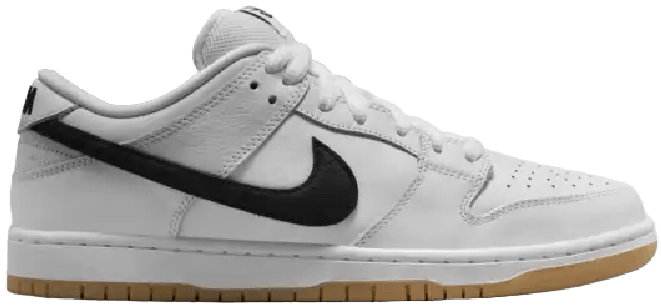
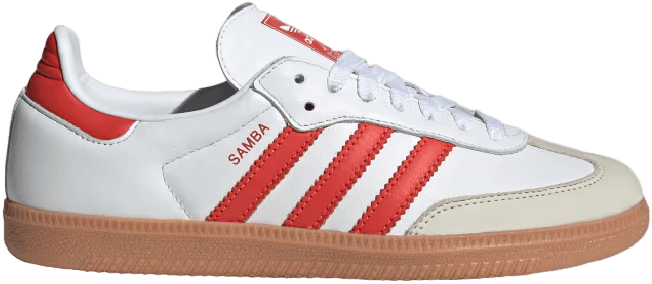
Originally designed in 1949 for icy European soccer pitches, the classic Adidas Samba indoor trainer retails at $100. It pairs a full-grain leather upper and T-toe suede overlay with a dark caramel suction cupsole. In skateboarding, the Nike SB Dunk Low “White Gum” and “Black Gum” releases retail at $115. Those SB Dunks combine Zoom Air heel units with tan pivot-circle outsoles.
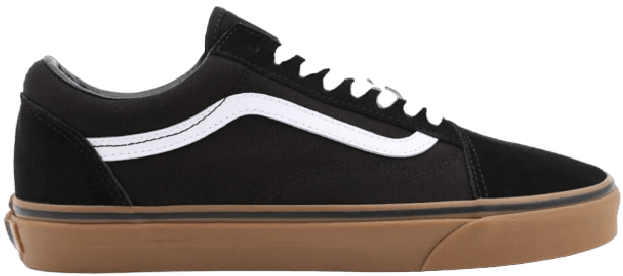
For vulcanized canvas fans, the Vans Authentic and Old Skool caramel-bottom editions retail between $65 and $75. Meanwhile, Converse equips select Chuck 70 releases ($90 retail) and One Star Pro skate lows ($75 retail) with honey-toned foxing tape.
How Do You Clean Dirt and Scuffs From Tan Soles in Three Steps?
Cleaning natural tan outsoles takes three steps: dry-brushing loose grit, scrubbing with warm soapy water, and wiping dry with a towel.
Natural latex rubber is slightly porous when exposed to standing water. Leaving wet suds on an outsole for more than 10 minutes can cloud its caramel finish. Following our dedicated guide to cleaning sneaker soles keeps the rubber supple and clear.
Always brush away dry pebbles and street dust before applying water. Wetting dry mud pushes abrasive grit deeper into waffle and herringbone grooves.
- Step 1 (Dry bristle brush): Use a stiff nylon brush to flick dry dirt and trapped gravel out of the outsole tread grooves.
- Step 2 (Warm soap wash): Mix 5 milliliters of mild dish soap into 250 milliliters of warm water and scrub the sidewalls in circular motions.
- Step 3 (Immediate towel dry & eraser): Wipe the rubber dry within 60 seconds, then buff stubborn black curb scuffs lightly with a damp melamine magic eraser.
How Do Retail Prices, Resale Fees, and Checkout Tools Compare for Limited Drops?
General-release trainers cost $65 to $100 at retail stores. Meanwhile, limited SB Dunk collaborations trade at $150 to $260 on secondary platforms.
When reselling limited SB Dunks, marketplace commissions determine net payouts. Under the eBay sneaker selling fee schedule, shoes sold at $150 or higher pay an 8% flat fee. By comparison, the StockX seller fee structure deducts 9% plus a 3% processing fee (12% total). Meanwhile, the official GOAT fee schedule deducts 10% plus $5 and a 3% cash-out fee.
On a $200 sale of a limited SB Dunk pack pair, eBay deducts $16 ($184 net payout). StockX deducts $24 ($176 net) on that same $200 sale. For limited SB Dunk and boutique Samba launches, collectors pair checkout suites like Valor AIO, Cybersole, and NikeShoeBot with skate shop raffles.
| Caramel Sole Model | Retail MSRP | Typical Resale Ask | eBay Net Payout (After Fees) |
|---|---|---|---|
| Vans Authentic Gum Sole | $65.00 MSRP | $55.00 to $65.00 | $47.50 net (under $150 tier) |
| Adidas Samba OG Dark Tan | $100.00 MSRP | $95.00 to $115.00 | $88.20 net (under $150 tier) |
| Nike SB Dunk Low White Gum | $115.00 MSRP | $155.00 average | $142.60 net (8% $150+ tier) |
| JJJJound x Adidas Samba | $160.00 MSRP | $240.00 average | $220.80 net (8% $150+ tier) |
Do tan natural rubber outsoles leave marks on indoor hardwood courts?
No, genuine natural latex rubber contains zero carbon black pigment, making it completely non-marking on polished indoor hardwood and gymnasium floors.
Why should you dry natural tan outsoles immediately after washing them?
Unbleached latex rubber can absorb standing moisture if left wet, which temporarily clouds the translucent caramel finish until the sole dries completely.