What Is an AIO Bot? Features, Proxies, Costs & 2026 Setup Guide

An AIO bot (all-in-one bot) monitors stock and automates checkout across dozens of websites at once. Everything you need to know about this 2026 software starts with multi-storefront reach. One client covers Nike, Shopify boutiques, Footsites, and collectibles together. Clean proxies, billing profiles, and cook-group alerts complete the setup.
- Multi-site reach: One dashboard runs tasks across Shopify, Footsites, Nike regions, Walmart, Amazon, and Pop Mart together.
- Core features: Includes URL/keyword monitors, multi-threaded task groups, proxy rotators, profile managers, and captcha harvesters.
- Typical cost band: Competitor retail licenses start around $150 to $400 upfront, while scarce keys hit $600 to $1,000 on resale.
- Required stack: Pair software with ISP or residential proxies ($50 to $90/mo), unique virtual cards, and release alerts.
What Does an All-in-One Bot Actually Do on Release Morning?
An all-in-one program submits simultaneous add-to-cart and checkout requests across multiple online stores from 1 unified dashboard.
Tightening supply from major brand production cuts raised competition on flagship Jordan Brand drops and hyped collaborations. Manual shoppers clicking 1 browser tab rarely beat 10,000 competing buyers checking out at 10:00 AM EST. All-in-one clients monitor product links, pick target sizes, and fill shipping forms automatically.
Unlike single-store tools that sit idle 6 days a week, multi-site software shifts smoothly from Saturday sneaker launches to mid-week trading cards. Check our overview of how sneaker bots operate to see how unified modules save setup hours.
Which Core Modules Power Multi-Storefront Checkout Software?
Six technical modules drive every modern suite: stock monitors, keyword finders, multi-threaded tasks, proxy routing, captcha harvesters, and auto-retry.
Inventory monitors poll product URLs or descriptive keywords every 2 to 4 seconds to spot live restocks immediately. The instant stock loads, multi-threaded tasks launch 20 to 200 independent checkout sessions across chosen sizes. Auto-checkout retries keep tasks alive cleanly if heavy launch traffic briefly returns HTTP 503 timeouts.
Built-in profile managers store encrypted shipping lines and virtual card numbers for quick task setup. Captcha harvesters also gather verification tokens on aged Gmail profiles so puzzles stall fewer checkouts. Together, these 6 modules replace manual form typing.
Why Do Proxies, Servers, Captcha Harvesters, and Cook Groups Matter?
Running raw software on home Wi-Fi triggers firewall bans within seconds; proxies, cook groups, and optional servers complete the stack.
Per Cloudflare Bot Management documentation, edge security systems track IP reputation, request speed, and TLS patterns closely. Sending 50 checkout requests from 1 residential router IP blocks your entire household connection. Pairing clean ISP and residential pools from our sneaker proxies guide isolates every task cleanly.
A reliable sneaker cook group ($35 to $60 monthly) supplies exact SKU codes, early variant IDs, and release timings before drops open. Operators running 100+ tasks also rent East Coast cloud sneaker servers ($40 to $70 monthly) for low-latency Ashburn fiber connections.
| Core Component | Primary Role | Typical Monthly Cost | Beginner Requirement |
|---|---|---|---|
| Static ISP Proxies | Low-latency Shopify & monitors | $50 to $65 (25 IPs) | Required for boutique drops |
| Residential Proxies | Unique home IPs for draws | $12 to $30 (2-4 GB) | Required for Nike & retail |
| Cook Group Alerts | SKUs, keywords & guides | $35 to $60 per month | Strongly recommended |
| Cloud VPS Server | High-bandwidth East Coast host | $40 to $70 per month | Optional under 40 tasks |
How Does an All-in-One Suite Compare With Site-Specific Tools?
All-in-one suites cover 50 to 100+ sites under 1 license. Specialists focus strictly on 1 store like Nike or Walmart.
Single-site software suits buyers chasing 1 narrow lane weekly. The Shit Bot targets global Nike SNKRS, while Stellar AIO targets Pokémon Center and Refract targets Walmart. Stacking 3 separate tools quickly costs $150 to $200 monthly.
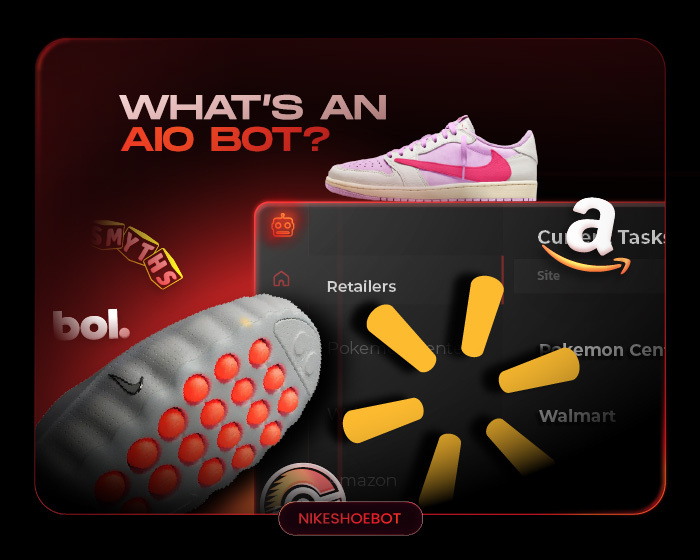
Multi-site platforms like Valor AIO, Cybersole, Make Bot, and NikeShoeBot consolidate those target categories inside 1 desktop client. Explore our full 2026 sneaker bots comparison to weigh each platform’s active store list before committing.
How Much Do AIO Bots Cost and Are They Legal to Run in 2026?
Competitor licenses span $150 to $400 retail (or $600 to $1,000 secondary keys), and footwear checkout software is legal in the US.
Review our sneaker bot cost breakdown to budget upfront keys plus recurring monthly or quarterly renewals. While hyped private keys historically climbed between $600 and $1,000 on aftermarket Discords, most major 2026 tools maintain accessible retail subscription models. Per FTC online shopping guidelines, check cancellation rules before activating recurring plans.
Regarding legality, our analysis of whether sneaker bots are illegal explains an important legal distinction. The US federal BOTS Act specifically bans automated scalping of live event tickets, not retail shoes or toys. Retailers still enforce private Terms of Service and can cancel duplicate orders or block flagged IPs.
Footwear bots violate store Terms of Service, not criminal law. Risks stay limited to cancels and IP bans.
How Should Beginners Configure Their First Multi-Site Task Group?
Small test groups of 10 to 25 tasks, unique virtual cards, and verified SKU monitors 60 minutes ahead build steady early runs.
New operators often launch 200 poorly configured tasks that immediately burn proxy bandwidth and trigger payment declines. Follow our complete drop setup guide and start small on 1 Shopify or retail release first. Logging every task status teaches you far more than running blind volume.
- Prep 60 minutes early: Import verified SKU links, load clean ISP or residential proxies, and test ping times before drop open.
- Use 1 card per profile: Generate distinct virtual card numbers through Privacy or Slash so retailers avoid household cancellations.
- Format Line 2 cleanly: Add subtle apartment or unit variations on Line 2 without breaking real postal carrier delivery.
- Track collection goals: Pair drop wins with smart storage ideas from our sneaker collection guide.
| Software Type | Storefront Coverage | Typical User Profile | Key Advantage |
|---|---|---|---|
| All-in-One (AIO) | Shopify, Nike, Retail, Toys | Multi-category collectors | 1 workspace for weekly drops |
| Nike Specialist | Global Nike SNKRS regions | Pure Jordan & Kobe buyers | Deep draw account management |
| Retail / Card Bot | Walmart, Target, Pokémon | TCG & collectible hunters | 24/7 retail SKU monitoring |
| Manual Checkout | Single browser / app tab | Casual 1-pair shoppers | $0 monthly infrastructure fees |
Can beginners run an all-in-one checkout client on a regular home laptop?
Yes, modern Windows and macOS laptops with 16 GB RAM and stable home internet easily run 15 to 40 tasks on proxies. Dedicated cloud servers only become necessary above 100 simultaneous tasks.
Why do online retailers cancel winning multi-task orders after confirmation?
Post-checkout fraud systems flag identical credit card numbers, matching phone numbers, or duplicate street addresses across separate orders. Assigning unique virtual cards and profiles to each task prevents most cancellations.